When someone searches your name before a job interview, a first meeting, an investment, or a date, the results decide your story before you say a word. Personal SEO, sometimes called reputation SEO or “your-name SEO” is the deliberate practice of shaping those results so the accurate, useful, and flattering pages rank, and the irrelevant or unflattering ones sink. You will never own the algorithm, but you can own or influence far more of that first page than most people assume.
This guide covers what actually appears on a name search in 2026, why the ground shifted once AI answers arrived, and a repeatable, seven-step process to take back control.
What a name search actually returns
The old “ten blue links” is now a stack of very different blocks. A typical name search returns an AI-generated answer at the top, a row of images, a knowledge panel on the right for recognized people, a “People also ask” box, and organic results interleaved with your social profiles and any news mentions.
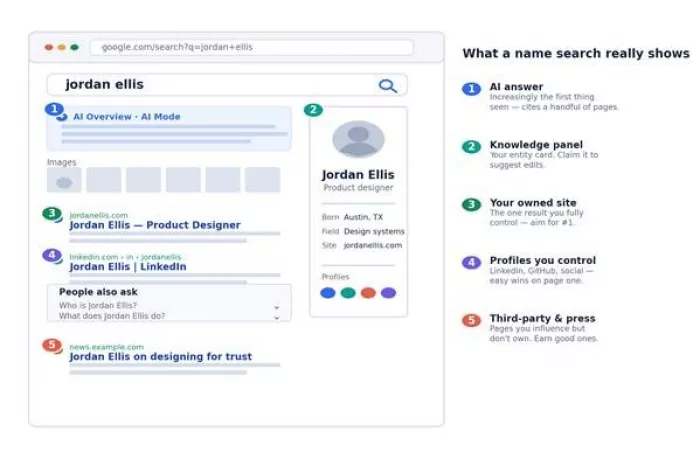
Figure 1 — The anatomy of a name search. You control each block to a different degree.
You control very little of the raw ranking, but every block is influenceable to some degree: your owned site (fully), your profiles (mostly), the knowledge panel (you can suggest edits), and the AI answer and press (indirectly, by improving the sources they draw from).
The 2026 shift. At Google I/O in May 2026, AI Overviews and AI Mode were merged into a single flow, and AI-generated answers became the default experience for most searches. In practice, a name query now often returns a synthesized paragraph about you first, assembled from a handful of sources Google trusts. Google has stated these AI features run on the same core ranking and quality systems as normal search, so there is no separate “AI trick.” You influence the AI answer by improving the sources behind it. And because ranking in the top ten no longer guarantees you are cited, the pages that get pulled into AI answers tend to be the ones that state facts plainly and are easy to extract.
| The real goal: not to “rank #1” for a keyword, but to make every prominent block, organic results, panel, images, and the AI answer, tell the same accurate story about you. |
The personal-SEO loop at a glance
The work is a cycle, not a one-off. Audit what ranks, claim and build the properties you can control, optimize them to point at one identity, publish content, connect everything with explicit entity signals, and monitor, then repeat as sources change.
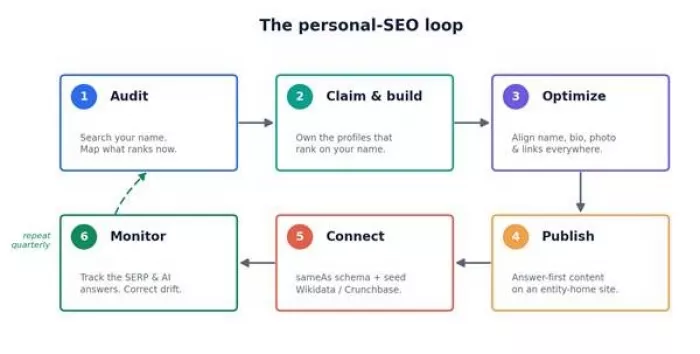
Figure 2 — The six-step loop. Revisit it roughly every quarter.
Step 1: Audit your name
You can’t fix what you haven’t measured. Start by seeing exactly what a stranger sees.
1. Search in a clean context. Use an incognito or private window, sign out of Google, and if you can, check from a different network so your own history and personalization don’t skew the results.
2. Search every variation. Your exact name, plus nickname, name + city, name + profession, and name + company, people search in all of these ways.
3. Screenshot the first two pages. Capture every block: the AI answer, the panel, images, each organic result, and “People also ask.” This is your baseline to measure against later.
4. Classify each result. Tag every URL as Owned, Controllable, Influenceable, or Out of reach (see the table below).
5. Read the AI answer, everywhere. Note what Google’s AI answer says about you, then ask the same “Who is [your name]?” question in ChatGPT, Perplexity, Gemini, and Claude. They increasingly summarize people, and they pull from overlapping sources.
Table 1 — Classifying what shows up for your name
| Category | Examples | Your control | First move |
| Owned | Your website, blog, portfolio | Full | Make it excellent; rank it #1 |
| Controllable | LinkedIn, GitHub, YouTube, X | High | Complete & optimize every field |
| Influenceable | Interviews, guest posts, podcasts | Medium | Earn good ones; request fixes |
| Out of reach | News, forums, data-broker pages | Low | Monitor; suppress or dispute if harmful |
Step 2: Build the properties that rank on your name
Google fills a name SERP with pages it judges authoritative and relevant to you. The quickest wins come from properties you can own or fully control, because they rank easily for an exact name and you decide what they say.
Own the anchor, a personal site. Your own domain, ideally yourname.com, is the single most valuable asset: it is the one result you control end to end and the one every profile points back to. Even a clean one-page site, a clear headline, a real photo, a concise bio, links to your work and your verified profiles, usually ranks for your name within weeks. This is your “entity home.”
Claim the profiles that already rank. LinkedIn, GitHub, YouTube, X, Crunchbase, About.me, Medium, and field-specific platforms almost always outrank a stranger’s passing mention of you. Claim each one that fits and fill in every field.
Table 2 — High-value properties, ranked by priority
| Property | Why it ranks / matters | Priority |
| Personal site (yourname.com) | Full control; anchors your entity | Essential |
| High authority; ranks for names | Essential | |
| GitHub / Behance / Scholar | Portfolio proof for professionals | High (by field) |
| Google Business Profile | Feeds the panel; local trust | High (if applicable) |
| Wikidata / Crunchbase | Feeds Google’s Knowledge Graph | High (for entity) |
| YouTube / About page | Video plus a controllable page | Medium |
| X / Instagram / Threads | Verified profiles confirm identity | Medium |
Not every property deserves equal effort. Prioritize the high-impact, low-effort moves first, and treat the expensive, low-return ones as a last resort.
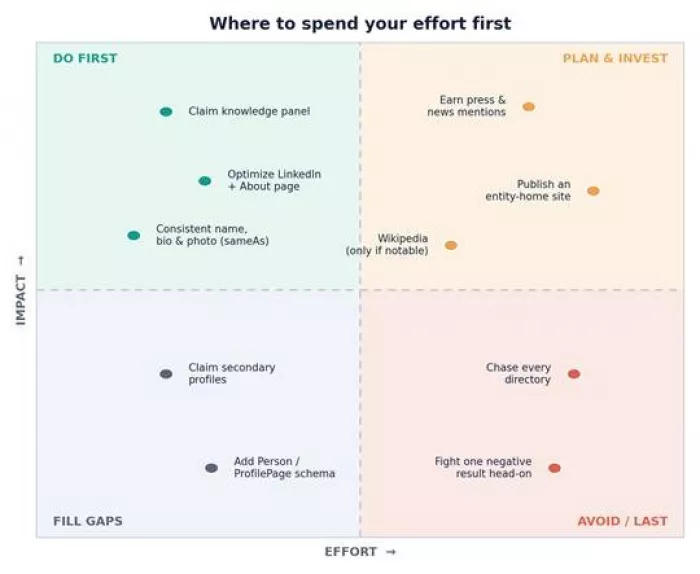
Figure 3 — Impact vs. effort. Start top-left; be wary of the bottom-right.
Step 3: Optimize every property to point at one identity
Consistency is the mechanism. Google merges scattered pages into a single “entity”, you, only when the signals line up: the same name, the same headshot, the same short bio, the same links. Three spellings of your name and four different photos make it harder for Google to consolidate, and harder for a knowledge panel to ever appear.
- Pick one canonical name form and use it everywhere (decide on the middle initial, nickname, and so on).
- Use the same professional headshot across profiles — original photography, not a stock image, is itself a trust signal in 2026.
- Write one one-to-two-sentence bio and reuse it; expand only where a platform expects more.
- Cross-link everything: every profile links to your site, and your site links to every profile.
- Fill the “featured,” “links,” and “contact” fields, empty fields are missed ranking and trust signals.
Step 4: Publish content that ranks, and gets quoted by AI
Profiles get you onto the page; content keeps you there and shapes the narrative. Publish on your entity-home site and on high-authority platforms.
- An About page in the third person, with your full name in the title and headings. This is often exactly what the panel and the AI answer draw from.
- Answer-first writing. Because AI answers favor extractable facts, state who you are, what you do, and your credentials in plain, declarative sentences near the top. “Jordan Ellis is a product designer who…” beats a poetic opener.
- Original, first-person material — talks, essays, case studies, interviews. It signals a real person with real experience, which both readers and AI weight heavily now.
- Guest articles, podcasts, and speaker bios create controllable pages on domains you don’t own, a fast way to add friendly results.
| Try this: write the single sentence you want Google’s AI to say about you, then make sure that exact claim appears — consistently — on your site and your top profiles. That is how you influence the answer without any “trick.” |
Step 5: Connect the dots: entities, schema, and the knowledge panel
Once your properties exist and agree with each other, help Google connect them explicitly.
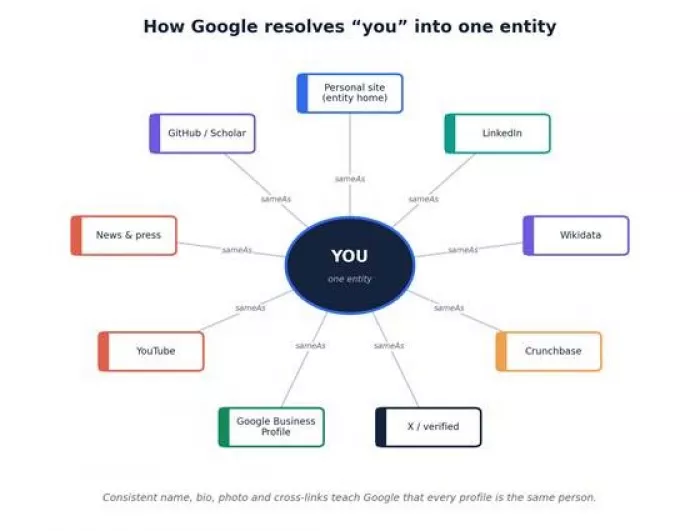
Figure 4 — sameAs links and consistent details teach Google that every profile is one person.
Add structured data. On your site, mark yourself up with Person schema (and a ProfilePage), and list every profile URL in the sameAs property. This literally tells search engines that all of those pages are the same person.
Seed the Knowledge Graph. Recognized entities often have entries in Wikidata and Crunchbase; a well-sourced Wikidata item is one of the more accessible ways to strengthen how Google understands you. Wikipedia is powerful but only realistic once you have genuine, independent press coverage attempting it too early usually backfires.
Claim your knowledge panel. If a panel appears for your name, look for “Claim this knowledge panel” at the bottom of it. Google verifies you, typically by confirming a profile you control and, for individuals, a selfie holding a government ID. Verification doesn’t hand you full control; it lets you suggest edits and update elements like the featured image and profile links. Edits that match authoritative sources get approved and ones that contradict them don’t, so fix the underlying sources first.
Step 6: Handle the hard cases
You share a name with someone else
Pair your name with a consistent descriptor — name + profession, or name + company ,and use that pairing in your titles and bios. You are not trying to outrank the other person on the bare name overnight; you are teaching Google that there are two distinct entities, then earning enough consistent signals that it separates you.
An unflattering or outdated result
Suppression is usually more realistic than removal. Publish and strengthen enough quality pages that the unwanted result slides to page two, where almost nobody looks. For genuinely harmful content, doxxing, non-consensual imagery, certain exposed personal data G,oogle’s “results about you” tools and removal requests exist, but they cover only narrow categories.
A wrong AI answer or panel
Treat it as a sources problem: correct the authoritative sources it is citing your site, your profiles, your Wikidata item then use Google’s feedback link to flag the inaccuracy. The output almost always fol,lows the sources.
| A caution: avoid any service that promises to “create a knowledge panel” or guarantees removals. Panels are generated by Google and can’t be bought, and guaranteed-removal claims are a reliable red flag. |
Step 7: Monitor and maintain
Personal SEO isn’t a one-time project. Sources change, someone publishes something new, and the AI answer drifts. Keep a light, regular cadence.
Table 3 — A simple monitoring cadence
| What to check | How | How often |
| Your name SERP | Incognito search + screenshot | Monthly |
| The AI answer, across engines | Ask each: “Who is [name]?” | Monthly |
| Panel & profile accuracy | Review panel, bios, photos | Quarterly |
| New mentions of your name | Google Alerts / mention tools | Ongoing |
| Full audit & re-prioritization | Re-run the whole loop | Quarterly |
The takeaway
You can’t dictate Google’s rankings, but a name search rewards precisely the things you can control: a strong owned site, complete and consistent profiles, clear factual content, explicit entity signals, and steady monitoring. Do the high-impact basics first, keep every source telling the same true story, and within a few months the page that greets anyone who searches your name will be one you built on purpose.
Quick-start checklist
- Register and build yourname.com as your entity home.
- Claim and fully complete LinkedIn plus the three or four platforms that fit your field.
- Standardize your name, headshot, and bio everywhere, and cross-link them.
- Add Person schema with a sameAs list on your site.
- Write a clear, factual About page and one strong piece of first-person content.
- Seed Wikidata / Crunchbase, and claim your knowledge panel if one appears.
- Search your name every month in incognito, and again after anything new is published.


Comments