The personal website is not making a comeback because people miss the old internet. It is returning because the new internet has become too unstable to build an entire identity on borrowed platforms.
For more than a decade, social media promised reach, discovery, and instant visibility. It still delivers all three. But it also turned professional identity into something fragile: scattered across profiles, shaped by algorithms, compressed into bios, and buried under the next post. That is why personal websites are quietly becoming useful again. Not as decorative digital resumes, but as controlled spaces where people can organize their work, explain their thinking, and build a reputation that does not vanish when a feed moves on.
The Internet Has Become Too Fragmented for One Profile to Explain a Person
A LinkedIn profile can show professional history. Instagram can show personality. X can show opinions. TikTok can show presence. YouTube can show expertise. None of them, alone, explains the full person.
That fragmentation is one of the biggest reasons personal websites are returning. Modern careers are no longer neat. A person may be a consultant, writer, designer, educator, investor, founder, operator, and creator at the same time. Social platforms are not designed to hold that complexity. They reduce people into quick signals: title, handle, follower count, recent post, pinned content.
A personal website gives that scattered identity a center. It lets someone decide what matters first, what needs context, and how different parts of their work connect.
| Platform | What It Shows Well | What It Often Misses |
| Career history, job titles, professional updates | Deeper thinking, creative range, personality | |
| Visual identity, lifestyle, behind-the-scenes presence | Professional credibility and searchable work | |
| X | Opinions, commentary, public conversation | Structured proof and long-term context |
| YouTube | Expertise through video and personality | Clean navigation across all work |
| Personal website | Complete positioning, archive, proof, offers, contact | Requires maintenance and thoughtful structure |
The Feed Is Fast But Reputation Is Slow
Social media is built around the moment. A post either catches attention quickly or disappears. That speed is useful for conversation, but weak for reputation.
Reputation needs memory. It needs repetition, proof, and structure. A thoughtful article, strong case study, useful guide, public portfolio, or clear personal essay can continue working long after a social post has stopped circulating.
This is where personal websites matter. They turn scattered output into a body of work. Instead of asking people to judge someone from the latest post, a website lets visitors see patterns: what the person has studied, built, written, solved, tested, or believed over time.
The best personal websites do not chase attention every day. They quietly collect evidence.
Why “Owned Space” Feels More Valuable Again

The phrase “owned audience” has been used for years, usually in marketing. But the idea now feels personal too. People are realizing that a public identity built only on social media is partly owned by someone else.
A platform controls the interface, the ranking system, the rules, the visibility, and often the relationship with the audience. A website does not remove all dependency, but it gives the individual a stronger base.
What people are trying to own is not just traffic. They are trying to own context.
A personal website lets them control:
● The first impression people get before deciding whether to hire, follow, invite, collaborate with, or trust them.
● The order in which their work is discovered, instead of leaving everything to a reverse-chronological feed.
● The connection between their ideas, services, projects, writing, products, media appearances, and contact points.
● The long-term archive of their work, so their best thinking does not disappear under newer content.
That is why the website is becoming less of a vanity asset and more of a professional control layer.
The New Personal Website Is Not a Portfolio. It Is a Proof System
Older personal websites often looked like static resumes. They had an about page, a contact page, maybe a few project links, and little else. The modern personal website is more useful because it works like a proof system.
For a freelancer, that proof may come through case studies. For a founder, it may come through product thinking and company notes. For a writer, it may come through essays. For a consultant, it may come through frameworks, client problems, and decision guides. For a designer, it may come through process, not only finished visuals.
The goal is not to say, “Here is who I am.” The stronger goal is, “Here is how I think, what I have done, and why that should matter to you.”
| Website Element | Weak Version | Strong Version |
| About page | A generic personal bio | A clear explanation of expertise, focus, and credibility |
| Portfolio | A gallery of finished work | Case studies with problem, process, choices, and outcomes |
| Blog | Random updates | A focused archive of useful thinking |
| Contact page | Basic email form | Clear next steps for hiring, speaking, consulting, or collaboration |
| Homepage | A broad introduction | A sharp positioning page that guides the visitor |
AI Is Making Human Context More Important
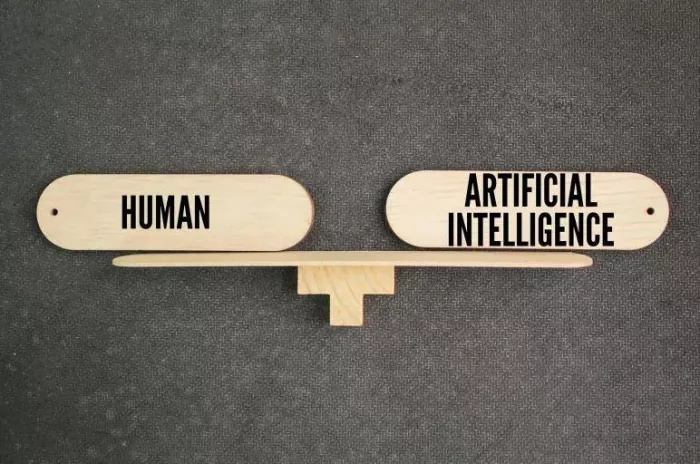
AI has made publishing easier, but it has also made online content feel more interchangeable. Social feeds are filling with polished but vague posts that sound competent without revealing much real judgment.
Personal websites help separate a person from the content flood. Not automatically, but when used well. A website can show depth that short-form posts cannot easily prove: original essays, work samples, long-term projects, personal frameworks, research notes, talks, interviews, experiments, and practical experience.
In an AI-heavy internet, trust will increasingly come from context. People will ask: Who is behind this idea? What have they built? What do they consistently understand? Where is the evidence?
A website gives those answers a permanent place to live.
Discovery Is Changing From “Find Me in the Feed” to “Search Me Later”
Social platforms are strong at immediate discovery. But many important decisions happen later.
Someone sees a post, hears a name in a podcast, reads a quote, gets a referral, or finds a comment useful. Then they search the person. What appears next matters.
A personal website improves that second step. It gives people a clean destination after initial discovery. This matters for hiring, partnerships, consulting leads, speaking invites, investor interest, newsletter growth, and media credibility.
| Discovery Moment | What the Person Needs Next | Why a Website Helps |
| A recruiter sees a useful LinkedIn post | Proof beyond the profile | A website shows work samples, writing, and case studies |
| A client gets a referral | Confidence before reaching out | A website explains services, credibility, and past outcomes |
| A reader likes an essay | More related thinking | A website organizes articles by theme |
| A podcast listener hears a guest | A simple way to learn more | A website brings bio, links, media, and contact together |
| A founder gains attention online | Trust from investors or partners | A website presents company thinking and public credibility |
Social media creates the spark. A personal website gives that spark somewhere to land.
The Best Websites Are Becoming Smaller and Sharper
The return of personal websites does not mean everyone needs a complex site. In many cases, the strongest personal websites are simple.
The mistake is thinking a website needs dozens of pages, heavy design, clever animations, or constant publishing. It does not. A weak website with too much clutter can damage credibility. A simple website with clear positioning can outperform a large but confusing one.
A useful personal website usually needs only a few strong parts: a clear homepage, a credible about page, selected proof, a small archive of thinking, and an obvious way to take the next step.
The standard is not “Does this look impressive?” The better question is “Does this make the person easier to understand and trust?”
What Should a Personal Website Actually Include?
A strong personal website should not try to copy a company website. It should work like a guided introduction.
The visitor should quickly understand who the person is, what they are known for, what they have done, and what action makes sense next. Every section should reduce confusion.
Practical elements worth including:
● A homepage that explains the person’s focus in plain language rather than relying on vague phrases like creator, strategist, builder, or storyteller.
● A proof section that shows selected projects, case studies, essays, clients, media mentions, products, or results without overwhelming the visitor.
● A writing or insights section that demonstrates judgment, not just activity.
● A contact or next-step page that clearly separates inquiries such as consulting, hiring, speaking, partnerships, or general messages.
The website does not need to say everything. It needs to say the right things in the right order.
The Quiet Comeback Is Really About Control
Personal websites are returning because people are learning the limits of rented visibility. Social platforms remain powerful, but they are not designed to be permanent homes for identity, reputation, and proof.
The future of online presence may not belong to those who post everywhere. It may belong to those who build a clear center and use platforms as paths toward it.
A personal website gives people that center. It turns attention into context, work into proof, and scattered visibility into a more durable reputation.
In the social media era, the most valuable digital space may be the one that does not refresh every few seconds.


Comments