A creator or small brand no longer needs a bigger internet presence first. It needs a clearer one. When attention is scattered across Instagram, TikTok, YouTube, newsletters, shops, podcasts, booking pages and communities, the biggest problem is not visibility. It is direction.
A single shareable profile solves that problem. It gives people one reliable place to understand who you are, what you offer, where to follow you, how to buy from you and why they should care.
The Internet Has Become Too Fragmented
Most creators and small brands now operate across multiple platforms. A photographer may post on Instagram, sell presets on Gumroad, publish tutorials on YouTube and take bookings through Calendly. A small skincare brand may use TikTok for discovery, Instagram for community, Shopify for sales and WhatsApp for customer support.
The problem is that audiences rarely move neatly from one platform to another. Someone may discover you through a short video but not know where to buy. Another person may hear your name in a podcast but not know which profile is official. A potential client may like your work but leave because your contact link is buried in old posts.
A single shareable profile reduces this friction. It becomes the central route between attention and action.
| Problem | What Happens Without a Single Profile | What a Single Profile Fixes |
| Scattered links | Users do not know where to go next | One clear destination |
| Platform confusion | People follow the wrong account or miss key offers | Official identity in one place |
| Lost conversions | Interest does not turn into clicks, bookings or sales | Clear next steps |
| Weak brand recall | Audience remembers content but not the brand | Consistent identity |
| Poor tracking | Hard to know which channel drives results | Central click and traffic view |
A Single Profile Is Not Just a Link Page
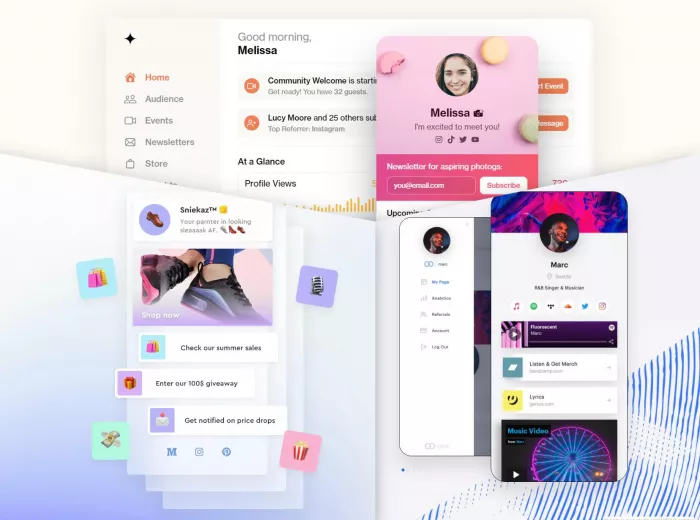
The mistake many creators make is treating a shareable profile as a dumping ground for links. That approach usually fails because it gives users too many choices without context.
A strong profile works more like a compact digital storefront. It should explain your identity, organize your most important actions and guide visitors based on intent. Someone should land on the page and immediately understand three things: who you are, what you are known for and what they should do next.
For creators, that might mean watching the latest video, joining a newsletter, downloading a free resource or booking a collaboration. For small brands, it might mean shopping bestsellers, reading reviews, checking delivery information or contacting support.
The profile should not show everything. It should show what matters most.
Why It Matters More for Creators
Creators build trust through repeated exposure, but attention usually arrives in short bursts. A viewer may like one Reel, one tweet, one tutorial or one podcast clip. That moment of interest is fragile. If there is no simple path from content to deeper connection, the opportunity disappears.
A single profile helps creators turn casual viewers into owned audience members. This is important because social platforms control reach, algorithms change and follower counts do not always translate into revenue.
The strongest creator profiles usually focus on:
● Newsletter or community sign-ups
● Latest or best-performing content
● Products, templates, courses or paid resources
● Brand collaboration contact details
● Social proof such as testimonials, media mentions or results
This turns the profile into a conversion layer, not just a directory.
Why It Matters More for Small Brands

Small brands often compete against bigger companies with larger ad budgets, stronger SEO and better-known names. Their advantage is clarity, personality and speed. A single profile helps express all three.
For a small brand, the profile can act as a lightweight homepage for mobile-first customers. Many customers do not want to browse a full website immediately. They want quick answers: what do you sell, is it trustworthy, what is popular, how much does it cost and how can I contact you?
A well-built profile can shorten the buying journey. Instead of sending users to a cluttered homepage, it can point them directly to bestsellers, reviews, new launches, WhatsApp support, store locations or limited-time offers.
| Profile Element | Why It Matters for Small Brands |
| Short brand description | Explains the offer in seconds |
| Bestseller link | Reduces decision fatigue |
| Reviews or testimonials | Builds trust quickly |
| Support or WhatsApp link | Helps hesitant buyers |
| Delivery or return info | Removes purchase anxiety |
| Offer or launch link | Converts high-intent visitors |
Trust Is Built Through Consistency
Trust is not only about good design. It is about consistency. If your Instagram bio says one thing, your website says another and your checkout page looks unrelated, users hesitate.
A single shareable profile creates a consistent front door. The same image, tone, description, offer and contact path appear everywhere. This matters because most users will not investigate deeply. They will judge quickly.
For creators, consistency signals professionalism. For small brands, it signals legitimacy. A clean profile with clear links can make a smaller operation feel organized, serious and easier to trust.
It Improves Conversion Without Adding More Content
Many creators and small businesses try to solve growth problems by posting more. But sometimes the issue is not content volume. It is poor routing.
If 10,000 people view a video but only a small number know where to subscribe, buy or inquire, the content is doing only half the job. A single profile improves the second half.
It helps move users through a simple journey:
| Stage | User Question | Profile’s Job |
| Discovery | Who is this? | Explain identity clearly |
| Interest | What do they offer? | Show strongest value |
| Trust | Are they credible? | Add proof and clarity |
| Action | What should I do next? | Provide focused links |
| Retention | How do I stay connected? | Push newsletter, community or follow links |
This is why a single profile can improve results even when traffic stays the same. It makes existing attention work harder.
The Best Profiles Are Built Around User Intent
A user-first profile is not arranged based on what the creator wants to promote. It is arranged based on what the visitor is likely trying to do.
For example, a new visitor may need an introduction. A returning fan may want the latest content. A buyer may want product details. A journalist or brand manager may want contact information. A confused customer may need support.
A strong profile balances these needs without overwhelming the page. The top section should handle the most common intent first. Less urgent links should sit lower or be grouped neatly.
Bad profiles often include every platform, every old campaign and every random link. Good profiles create hierarchy.
What a Strong Single Profile Should Include
The exact structure depends on the creator or brand, but the core ingredients are similar. The page should open with a clear identity line, followed by the most important action.
For a creator, that action may be “Join the newsletter” or “Watch the latest guide.” For a brand, it may be “Shop bestsellers” or “View new arrivals.”
Useful elements include:
● A sharp one-line description
● One primary call-to-action
● Two to four secondary links
● Proof points, reviews or featured work
● Contact or collaboration details
● Updated links for current campaigns
● Consistent visuals and tone
The goal is not to make the profile look busy. The goal is to make decisions easier.
Common Mistakes That Reduce Its Value
Many shareable profiles fail because they are treated as static pages. A creator adds links once and forgets to update them. A brand leaves expired offers live. A campaign link stays at the top long after it stops mattering.
Another common mistake is making every link equal. When everything is highlighted, nothing is important. A user should not have to guess whether to shop, subscribe, book, read or follow.
There is also a trust issue. Broken links, vague labels, messy thumbnails and outdated bios can make even a legitimate creator or brand look careless.
| Mistake | Why It Hurts |
| Too many links | Creates decision fatigue |
| Vague labels | Users do not know what they are clicking |
| No primary action | Traffic does not convert |
| Outdated campaigns | Makes the brand look inactive |
| Inconsistent visuals | Weakens recognition |
| No contact route | Loses business inquiries |
A Single Profile Also Helps With Measurement
Growth needs feedback. A single profile makes it easier to see what people actually click after discovering you. That insight is valuable because social media metrics can be misleading.
A video may get views but no sales. A post may get likes but no newsletter signups. A collaboration may bring traffic but no inquiries. When key links are centralized, it becomes easier to understand which platforms and campaigns are producing meaningful actions.
For small brands, this can guide product promotion. For creators, it can show whether audiences care more about courses, newsletters, templates, videos, events or collaborations.
It Becomes a Portable Identity
One of the biggest advantages of a single shareable profile is portability. It can go anywhere: social bios, QR codes, email signatures, packaging, pitch decks, business cards, event posters, podcast descriptions and YouTube descriptions.
That portability matters because creators and small brands often grow through mixed channels. Someone may discover you offline and convert online. Someone may scan a QR code at an event and later buy from your store. Someone may receive your link in a DM and forward it to a friend.
A single profile gives every channel the same destination.
Final Takeaway
A single shareable profile matters because it brings order to a fragmented digital presence. It helps creators turn attention into the audience, and it helps small brands turn curiosity into trust, clicks and sales.
The strongest profiles are not packed with links. They are structured around user intent. They explain quickly, guide clearly and remove unnecessary friction.
For creators and small brands, that clarity is not a small detail. It is the difference between being seen and being remembered, between getting clicks and getting customers, between having a presence and building a real digital identity.


Comments