Build enough link-in-bio pages, for a skincare brand, a couple of musicians, a food truck, a dozen scrappy side projects, and the page itself stops being the interesting part. The people landing on it are. And lately, those people are young.
Watch a nineteen-year-old open a link page and the difference shows up in about three seconds. They do not read it. They scan it the way anyone scans a vending machine, hunting for the one thing they already decided they wanted before they tapped. If it is not near the top, if it loads slowly, if it looks like a spreadsheet, they are gone and back into the feed.
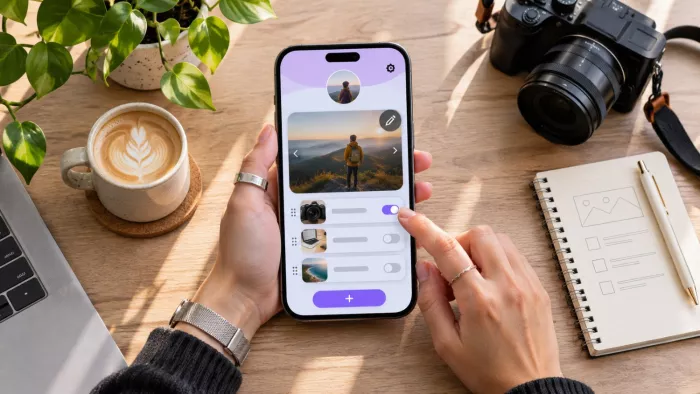
That tiny habit, repeated across millions of taps, quietly rewrote what a link in bio is for. What follows is what actually changed, the numbers that keep turning up in recent research, and what any of it means for an audience that skews young.
The short version ● Gen Z treats the bio link as an exit to buy, not a menu to explore. ● 72% of Gen Z have bought directly inside a social app, ahead of millennials at 65%. ● 46% prefer social platforms over search engines when they want to find something. ● They judge a page by how it looks in the first seconds. A matched, branded look reads as trust. ● The platforms split apart: TikTok gates the link behind 1,000 followers, Instagram opened up to five. |
The link stopped being a menu
For a long time the job of a bio link was simple: here are all my things, pick one. It was a contents page. The behaviour that built around it assumed a patient visitor who arrived curious and willing to look around.
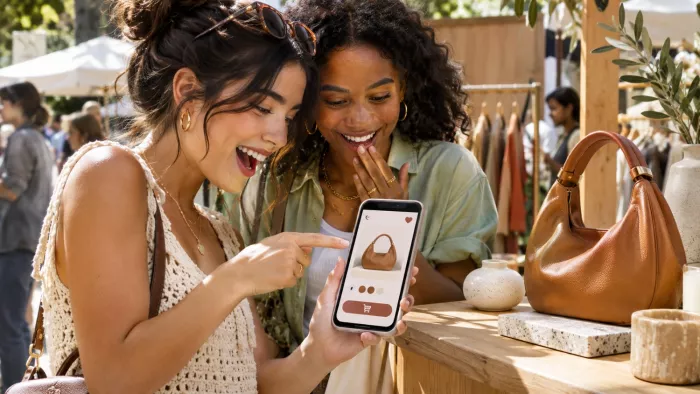
Gen Z does not arrive that way. By the time a young user taps your link, they have usually watched a few of your videos, read the comments, and made up their mind. The link is the final ten feet of a decision that already happened in the feed. Line those two mindsets up and the gap is obvious.
| Behaviour | The old default | How Gen Z treats it |
|---|---|---|
| Why they tapped | Curious, exploring who you are | Already decided before the tap |
| How they read it | Scans every option top to bottom | Finds one thing, ignores the rest |
| Trust signal | Does the account name match? | Does the page look like the brand? |
| The journey | Discover, research, sleep on it, buy | Discover and buy in one sitting |
| Patience | Will wait for a page to load | Bounces in seconds if it stalls |
| Where it points | A homepage or a blog | A product, a drop, a presave, a checkout |
Five shifts that actually show up in the data
72% of Gen Z bought inside a social app | 77% use TikTok for product discovery | 46% prefer social over search engines | 51% check creator content before buying |
1. Discovery moved inside the app, so the link is the way out Gen Z does not land on your bio to find out who you are. They found that out in the feed. Roughly 77% use TikTok for product discovery, and about two thirds say they discover products through social videos. By the moment they tap, the link is the back door of the shop, not the front window. If it opens onto a slow homepage that asks them to “learn more,” you lose the people who already learned everything in the comments. |
2. They buy in the same scroll The tidy funnel of see it, research it, wait a week, then buy does not describe how most young shoppers behave now. A Grin study put Gen Z social commerce at 72%, compared with 65% of millennials. Discovery and purchase collapse into one session. That is the single biggest reason a link that detours them through three pages before the thing they wanted tends to leak taps at every step. |
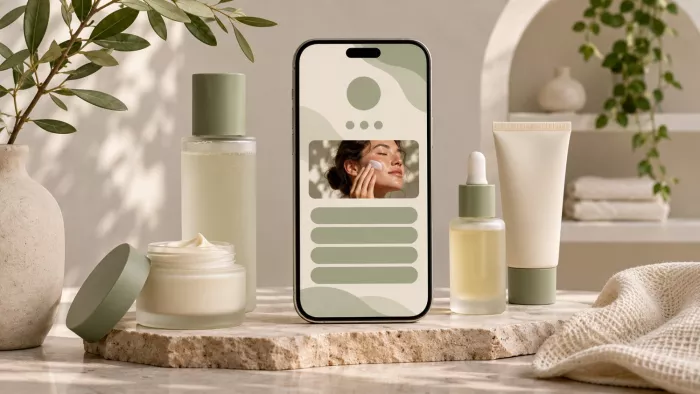
3. The page has to look like you Design is not decoration here, it is a trust check. A link page sitting in a generic default theme reads as low effort, and low effort reads as a little risky. That is why so many young creators treat the page as part of the brand, carrying the same colours, fonts, and cover art across from their feed. With about half of Gen Z checking a creator's content before they buy, the link page is expected to match the world they just came from. Break the look and you plant a small seed of doubt right at the checkout. |
4. They are fast, fragmented, and a little suspicious There is no single place Gen Z searches. eMarketer found the behaviour split cleanly: young women lean toward TikTok, young men toward YouTube, and close to a third of young social shoppers used Pinterest for product discovery in a single month. Your link page might be opened from five different contexts in a day. A dead link, a drop that sold out a month ago, a “coming soon” that never came, each one costs you, because so much of this generation assumes the freshest option is the genuine one. |
5. The link is identity, not just utility For a lot of young users the bio link is a tiny homepage for whoever they are this month: the playlist, the tip jar, the petition, the small business, the finsta. It changes constantly and it is curated like an outfit. Treating it as a permanent list of every account they ever made misses the point entirely. It is a statement about what matters right now, and it gets edited the moment that changes. |
The numbers behind the shift
None of the shifts above are hunches. Here are the figures that keep turning up across recent reports, with sources, so they are easy to sanity check.
| What it measures | Figure | Source |
|---|---|---|
| Gen Z who bought directly in a social app | 72% | Grin, via NetInfluencer |
| Millennials who bought directly in a social app | 65% | Grin, via NetInfluencer |
| Gen Z who prefer social platforms over search engines | 46% | 2025 usage surveys |
| Gen Z who use TikTok for product discovery | 77% | 2025 compiled data |
| Instagram profiles running a link-in-bio tool | ~31 million | influencers.club, 2025 |
| Linktree's share of those profiles | ~80% (24.7M) | influencers.club, 2025 |
| Link-in-bio users with under 5,000 followers | 77% | influencers.club, 2025 |
| Clickable links an Instagram bio allows (since Apr 2023) | Up to 5 | Meta |
A fair word on confidence: most of these are third-party estimates built from sampling public profiles and surveys, not official counts published by the platforms. Treat them as well-sourced direction, not gospel decimals.
The plumbing changed, and Gen Z grew up inside it
Part of why young users behave this way is that the rules shaped them. For years Instagram allowed exactly one link, a deliberate choice to keep people from wandering off platform. That single rule is the entire reason the link-in-bio industry exists, and why Linktree, launched back in 2016, grew into a category of its own.
In April 2023 Instagram finally relented and allowed up to five links, with the first one shown and the rest expanding on a tap. Captions still refuse to carry a clickable link. TikTok went the other direction and still hides the profile link behind a threshold: 1,000 followers or a Verified Business Account. A generation that grew up tapping through these quirks simply knows that a small TikTok creator's “link in bio” might not even exist yet, so they go hunting in a pinned video or the comments instead.
| Platform | Clickable bio links | The catch |
|---|---|---|
| Up to 5 | First link shows, the rest expand on tap. Captions stay unclickable. | |
| TikTok | One website link | Only with 1,000+ followers or a Verified Business Account. |
| X (Twitter) | One website field | Links in posts are already clickable, so it matters less. |
| YouTube | Up to 14 | Set on the channel profile. |
| Threads | Up to 5 | Meta added click tracking for bio and post links. |
What actually works when your audience is young
If the people tapping your link are mostly Gen Z, a few things reliably help and a few reliably hurt. Here is the checklist worth pinning next to the page builder.
Do this
| Skip this
|
The verdict
After enough time spent watching the back end of these pages, the pattern stops feeling like a trend and starts feeling like a rule. Older visitors treat a link page like a contents page. Gen Z treats it like the last few feet of a checkout line, and they want that stretch clear. The pages that win with them are not the ones with the most options. They are the ones that guessed right about the single thing the person already wanted and put it first.
If there is one idea to take from all of this, let it be this: stop building a directory and start building a decision. Lead with the drop, match it to the feed, keep it fresh, and cut everything that only exists to look complete. The generation raised on these links can smell filler, and they will leave before the page even finishes loading. Build for the fast tap rather than the patient browse, and the link in bio quietly turns into the most valuable patch of real estate an account owns.



Comments