When your content, audience, and income stop living in separate corners of the internet, creative work starts to feel a lot less fragile.
A lot of creator work looks exciting from the outside and strangely exhausting from the inside. A YouTube channel is growing, a newsletter is finally getting traction, brand emails are arriving, files are piling up, and content ideas are scattered across notes apps, Google Docs, cloud folders, voice memos, DMs, and half-finished drafts. From a distance, that looks like momentum. Up close, it often feels like administrative chaos wearing a creative costume.
That is the hidden problem many creators run into once things start working. The issue is not a lack of tools. It is the opposite. There are too many places where the work lives. One platform holds the audience. Another holds the drafts. Another tracks payments. Another stores assets. Another is where planning happens, at least in theory. Over time, the creative business starts to feel like it was assembled room by room with no blueprint.
That is why the idea behind Zivolio feels timely. It is not really selling “another creator app” so much as addressing a more basic need: a central home where your work, your people, and your creative business can live together. For writers, YouTubers, educators, podcasters, designers, and multi-platform creators, that kind of center can be more valuable than another clever publishing feature. Sometimes the biggest unlock is not more reach. It is finally having one place that makes the whole operation make sense.
Why Creators Feel Scattered All the Time
The modern creator workflow is full of invisible fragmentation. It rarely breaks in one dramatic way. It leaks energy in small ways all week.
The first leak is content sprawl. Ideas begin in one place and end somewhere else. A script starts in a notes app. Research sits in a browser tab graveyard. Graphics live in a design folder. A draft gets revised in Google Docs. The published piece goes live on a platform that does not remember the context behind it. Months later, when it is time to repurpose that work, the creator is not building from momentum. They are hunting for scraps.
The second leak is audience fragmentation. Followers exist across YouTube, Instagram, email, podcast apps, paid communities, and direct sales channels, but the creator rarely sees them as one connected group. Instead, they see platform-specific slices of attention. That makes it harder to understand who the real supporters are, which content deepens the relationship, and what actually moves someone from casual viewer to paying customer.
The third leak is workflow fragmentation. Planning happens in one tool, publishing in another, collaboration in another, and analytics somewhere else. Even creators who are productive inside that setup often feel like they are maintaining systems instead of making things. The work gets done, but at the cost of a lot of mental switching.
Then there is the money problem. Revenue can arrive from sponsorships, products, memberships, affiliate links, courses, subscriptions, tips, and platform payouts. That diversity is great in theory. In practice, it can leave creators with a business that is technically growing but still hard to read. It becomes difficult to tell what is driving the most value, what deserves more investment, and which part of the machine is quietly doing most of the heavy lifting.
| Creator Problem | What It Looks Like in Real Life | Why It Becomes Expensive |
| Scattered content | Drafts, assets, scripts, and published work live in different tools | Repurposing gets harder and valuable work gets lost |
| Fragmented audience | Followers and customers are spread across multiple platforms | Harder to build lasting relationships and targeted offers |
| Messy workflow | Planning, creation, editing, and publishing all happen in separate places | More time lost to context switching |
| Revenue sprawl | Income comes from many channels with no central view | Harder to see what is sustainable and what is noise |
That is the emotional reality behind a lot of creator burnout. It is not always about making too much. Often it is about managing too much in too many places.

Meet Zivolio: A Creative Home Base
Zivolio is best understood as a creator home base. The appeal is not just that it stores things, but that it tries to connect the parts of a creator business that usually remain disconnected. Instead of treating content, audience, monetization, and workflow as separate layers managed through separate tools, it frames them as part of one operating system.
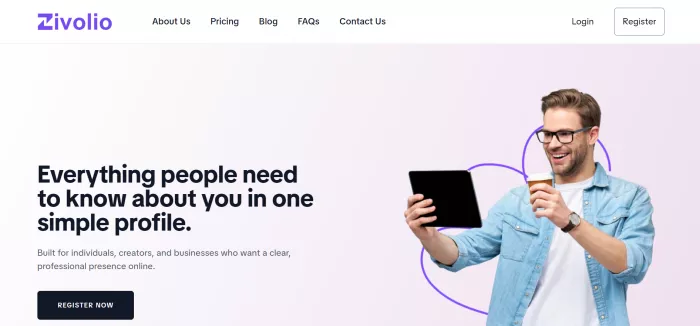
That positioning is what makes it interesting. Many creator tools solve one narrow problem well. One tool helps with newsletters. Another helps with memberships. Another handles analytics. Another stores documents. Another manages publishing calendars. Zivolio’s pitch is subtler and broader: bring the moving pieces into one place so the creator no longer has to reconstruct the business from fragments every time they want to make a decision.
For the right kind of creator, that is a real advantage. The problem many creators face is not that they cannot produce. It is that their output, audience, and income live in different systems that do not speak to each other clearly. A central layer changes how planning, publishing, and decision-making feel. Less scattered work usually leads to better work.
All Your Content, Finally in One Library
One of the strongest ideas in the Zivolio pitch is the unified content hub. Creators rarely just make “content” in the abstract. They make scripts, ideas, episode outlines, thumbnails, notes, captions, launch pages, email sequences, downloadable assets, clips, and updates. When all of that is split across tools, the work loses continuity.
A structured content library changes that. It means one place where ideas, drafts, and finished pieces can sit in a connected system instead of becoming isolated files. That makes search easier, but more importantly, it makes reuse easier. A creator can return to an old piece and actually see it as a reusable asset instead of a completed task that disappeared into the archive.
This matters most for creators working across formats. A podcast episode can become short clips, quote graphics, a blog recap, an email, and a social thread. A strong essay can become a video script, a carousel, a free resource, and the core of a paid product. The easier it is to see all of that in one place, the easier it becomes to treat content as an ecosystem instead of a series of disconnected outputs.
| Content Layer | Typical Scattered Workflow | Unified Workflow Advantage |
| Ideas | Notes app, screenshots, voice memos | One searchable backlog |
| Drafts | Google Docs, email drafts, local files | Single working library |
| Assets | Drive folders, design tools, downloads | Easier retrieval and reuse |
| Published work | Different platforms with weak internal connection | Clear record of what exists and what can be repurposed |
| Series/projects | Tracked manually or inconsistently | Content grouped by themes, campaigns, or formats |
That kind of system does not just save time. It reduces creative friction.
Know Exactly Who You’re Creating For
The audience layer may be even more important than the content layer. Creators often have followers everywhere and a clear view nowhere. They can see subscribers on one platform, email opens in another, purchases in another, and community activity somewhere else. What they usually cannot see easily is the person across those touchpoints.

A unified audience view changes the quality of decision-making. Instead of thinking in platform silos, the creator can start thinking in relationships. Which people are casual observers and which are serious supporters? Which content types bring in engaged subscribers instead of vanity reach? Which group actually buys, replies, returns, and shares?
That kind of visibility matters because creator businesses become more stable when they stop relying purely on algorithmic visibility and start understanding owned audience relationships. If Zivolio helps creators move from “followers scattered across platforms” to “people I actually understand in one place,” that is a strong strategic benefit, even if it is not the flashiest feature on paper.
Your Income, Finally in One View
One of the most difficult things about creator growth is that revenue often improves before clarity does. A creator may be earning from courses, sponsorships, memberships, affiliate programs, paid communities, consulting, and direct product sales, yet still feel unsure which part of the business is truly carrying the operation.
That is where a central monetization view becomes useful. Not because dashboards are exciting, but because fragmented income makes smart planning harder. If one creator sees all revenue sources together, they can start noticing patterns that are easy to miss in isolation. Maybe a newsletter drives more sales than a larger social account. Maybe a low-ticket digital product quietly outperforms ad revenue. Maybe one content series consistently attracts the audience that later becomes customers.
That kind of visibility supports better choices. It helps creators invest time where the business is actually working, not just where the engagement looks loudest.
From Idea to Published, Without Ten Open Tabs
The workflow piece may be the least glamorous and the most important. Most creator systems are held together by tab discipline, memory, and recurring low-level stress. Planning is one tool. Comments are in another. Feedback happens over chat. Assets are somewhere else. Analytics are checked later, if at all. It works, but it rarely feels smooth.

A more unified workflow changes the emotional texture of creative work. It becomes easier to move from idea to draft to edit to published output without losing the thread halfway through. For creators who work with editors, designers, or assistants, this becomes even more useful because collaboration stops depending so heavily on scattered messages and improvised file sharing.
This is where Zivolio’s broader value proposition becomes clear. It is not just about centralization for its own sake. It is about reducing the tax creators pay every day for having their work spread across too many disconnected places.
How Different Creators Might Use It
| Creator Type | Before a Central Home Base | With a More Unified Setup |
| YouTuber | Scripts, thumbnail files, sponsor notes, and analytics all live separately | Series, assets, and performance can be tracked more coherently |
| Writer / newsletter creator | Research in one app, drafts in another, products and readers elsewhere | One place to connect ideas, issues, readers, and monetization |
| Educator / course creator | Lessons, student materials, launch assets, and feedback spread across tools | Easier to see the full lifecycle of content and customer experience |
| Multi-platform creator | A main piece gets repurposed manually and inconsistently | Derivative content can be tracked back to a central source piece |
The common pattern is not industry-specific. It is operational. Creators are not just making content anymore. They are running mini media businesses. That means the system matters almost as much as the talent.
Why Creators Need a Home Base Now
Platform dependence has become riskier, not safer. Algorithms shift. Monetization rules change. Discovery rises and falls unpredictably. Creator careers are also getting more layered. The modern creator is often publishing across formats, building direct audience relationships, selling products, taking brand deals, and trying to create long-term stability outside any single platform.
Without a central home base, every platform shift feels more disruptive than it should. The creator ends up rebuilding visibility, audience understanding, and workflow logic over and over. A tool like Zivolio matters in that context not because it is trendy, but because it addresses the more strategic need for continuity. The creator does not just need another channel. They need a center.
There are only a few core benefits that really matter here:
Clarity: you can see what exists, what is working, and what deserves attention.
Speed: less time is wasted hunting files, links, and context.
Consistency: publishing becomes easier when the system supports repetition.
Ownership: your work, audience, and revenue picture stop depending entirely on other platforms.
When Everything You Make Finally Lives in One Place
The strongest promise behind Zivolio is not really technical. It is emotional. Creators do not just want more features. They want less fragmentation. They want to feel that the work they have already done is organized, usable, and connected to the people and revenue it creates.
That is what makes the idea compelling. A central creative home does more than tidy files. It changes the feel of the work. Instead of reacting to scattered systems, the creator can work from a place that feels more grounded and intentional. Your content has a center. Your audience has a shape. Your income has context. Your workflow stops feeling like a patchwork of tabs and starts feeling like an actual business.
Zivolio works best when seen through that lens. Not as another app asking for attention, but as a subtle attempt to give a creator’s work one stable place to live. And for a lot of creators, that may be the feature that matters most.


Comments