Social media scheduling tools are no longer just calendars for queuing posts. The better ones now help write captions, repurpose content, suggest hashtags, plan campaigns, track performance, and keep teams from posting randomly at the last minute.
The best tool depends on your workflow. A solo creator may need fast caption help and a clean calendar, while an agency may care more about approvals, analytics, client reports, and multi-brand management. This guide breaks down 10 strong AI social media scheduling tools in a practical way, without turning every section into a long review.
Quick Comparison Table
| Tool | Best For | AI Strength | Free Plan or Trial | Starting Price |
| Buffer | Creators and small teams | Caption writing and post repurposing | Free plan available | From $6/month per channel |
| Hootsuite | Larger teams and brands | AI captions, campaign ideas, analytics support | Free trial available | From $99/user/month |
| Later | Instagram, TikTok, and visual planning | Caption help and visual content planning | Free plan or trial may be available | From $25/month |
| Sprout Social | Analytics-heavy teams | AI insights, publishing, and reporting support | Free trial available | From $79/month |
| SocialBee | Evergreen content and category-based posting | AI content generation and recycling | 14-day free trial | From $29/month |
| Planoly | Visual creators and Instagram-first brands | AI caption writing and content planning | Free or limited plan may be available | From $16/month |
| Ocoya | AI content creation plus scheduling | AI captions, creatives, and ecommerce-style posts | 7-day free trial | From $15/month |
| Predis.ai | Turning ideas into social posts | AI creatives, videos, captions, and competitor ideas | Free trial or limited free access | From $32/month |
| Publer | Affordable scheduling | AI prompts, recycling, and analytics on higher plans | Free plan available | From $5/month |
| Metricool | Scheduling plus analytics | AI assistant, analytics, and competitor tracking | Free plan available | From $20/month |
1. Buffer
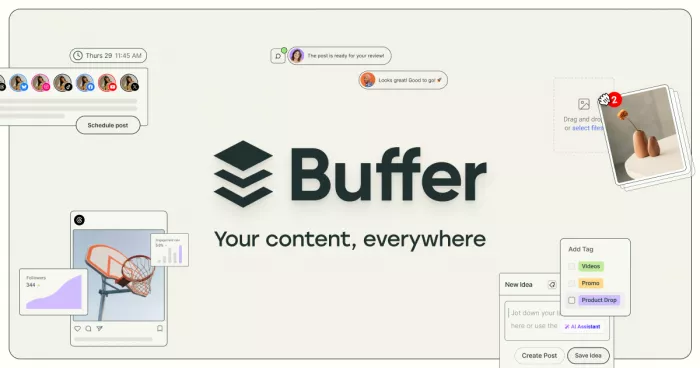
Best for: Creators, small businesses, and lean marketing teams that want simple scheduling with useful AI writing support.
Buffer is one of the easiest tools to recommend when the main goal is to plan, write, and schedule posts without dealing with a heavy dashboard. It supports major social platforms, including Instagram, Facebook, LinkedIn, TikTok, Pinterest, X, and YouTube Shorts. The product is especially useful for users who want a clean calendar, fast post creation, and a simple way to manage multiple channels.
The AI assistant is not trying to replace a full content strategy tool, and that is part of its appeal. It helps users turn rough ideas into cleaner captions, rewrite posts in different tones, and adapt one idea for different platforms. A LinkedIn post can become a shorter X post, a softer Instagram caption, or a more polished business update without starting from zero.
AI features worth noting:
● It helps generate captions from short prompts or unfinished post ideas.
● It can rewrite posts in different tones, including casual, professional, concise, or friendly.
● It helps repurpose one content idea across different social platforms.
● It supports faster publishing when you already have the campaign idea ready.
Workflow experience:
Buffer works best when you want speed and clarity. You write or paste a post idea, use the AI assistant to improve it, select the platform, add visuals, and place it on the publishing calendar. The interface is clean enough for beginners, but still useful for small teams managing several channels.
| What Feels Good | What Feels Limited |
| Very clean and beginner-friendly scheduling experience | AI features are useful but not deeply advanced |
| Good for repurposing captions across platforms | Not ideal for deep social listening |
| Affordable for creators and small businesses | Advanced reporting can feel limited for larger teams |
Pricing: Buffer has a free plan for up to 3 channels. Paid plans start at $6/month per channel for Essentials. The Team plan starts at $12/month per channel.
Use it if: You want a simple AI-assisted scheduler that helps with captions, publishing, and basic content planning.
Skip it if: You need enterprise analytics, complex approvals, social listening, or advanced competitor tracking.
Verdict: Buffer is one of the best AI social media scheduling tools for creators and small teams that want a clean, affordable, and low-friction posting workflow.
2. Hootsuite
Best for: Established brands, marketing departments, and teams that need scheduling, approvals, analytics, and multi-platform control in one place.
Hootsuite is one of the older and more complete names in social media management. It is built for users who manage many accounts, need campaign visibility, and want more than a basic post queue. The platform supports scheduling, analytics, inbox management, team workflows, and integrations, which makes it more suitable for businesses than casual creators.
Its AI features are built around helping teams move faster with content creation and campaign planning. Hootsuite’s AI tools can help write captions, generate post ideas, suggest hashtags, and speed up content drafting. For larger teams, the bigger value is not just the AI writing, but the way content, approvals, publishing, and reporting sit inside one system.
AI features worth noting:
● It helps generate captions and social post ideas for multiple platforms.
● It can assist with hashtag suggestions and campaign copy.
● It supports content creation inside a broader social media management workflow.
● It works well when teams need publishing and analytics together.
Workflow experience:
Hootsuite feels more structured than lightweight tools like Buffer or Publer. You can create posts, schedule them across multiple platforms, manage comments or messages, and track performance from a central dashboard. The tradeoff is that the interface may feel heavier for beginners, especially if they only need basic scheduling.
| What Feels Good | What Feels Limited |
| Strong platform coverage and team workflow tools | More expensive than most creator-focused tools |
| Good for brands managing many accounts | Interface can feel heavy for beginners |
| Useful analytics and reporting features | Not ideal for solo users on a tight budget |
Pricing: Hootsuite paid plans start at $99/user/month. Higher plans and enterprise packages cost more depending on users, social accounts, and business needs.
Use it if: You manage social media for a brand, business, or team and need scheduling plus reporting in one place.
Skip it if: You are a solo creator who only needs basic caption help and a simple content calendar.
Verdict: Hootsuite is best for serious social media teams that need structure, reporting, and multi-account management, but its pricing makes less sense for casual users.
3. Later
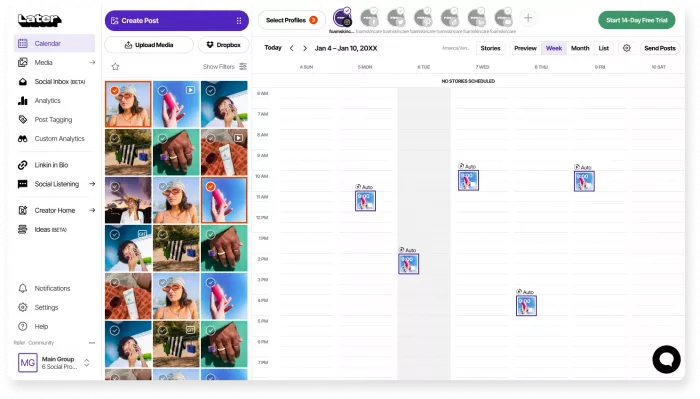
Best for: Instagram-first creators, visual brands, TikTok planners, and businesses that care about how their feed looks.
Later is strong when social media planning is visual. It is especially useful for Instagram, TikTok, Pinterest, and creators who want to plan content around images, short videos, and visual consistency. Instead of feeling like a purely text-based scheduler, Later gives users a more visual planning experience.
The AI side helps with caption writing, content ideas, and faster post preparation. This is useful when a creator already has images, product photos, or short videos ready but needs help turning them into scheduled posts. Later is not the deepest analytics platform on this list, but it is practical for visual-first workflows.
AI features worth noting:
● It helps generate or improve captions for visual posts.
● It supports faster planning for Instagram growth and TikTok content.
● It helps organize visual campaigns around a calendar.
● It can reduce the time spent writing captions for image-heavy posts.
Workflow experience:
Later feels natural when you are planning content around visuals. You upload media, write or improve captions, preview the content, and schedule posts to the right channel. For brands that care about feed appearance, product launches, creator campaigns, or lifestyle content, the workflow feels more relevant than a plain post queue.
| What Feels Good | What Feels Limited |
| Excellent for visual planning and Instagram-style workflows | Not the best choice for deep enterprise reporting |
| Good for creators, ecommerce, and lifestyle brands | Some features depend on plan limits |
| Simple enough for small teams | Less flexible for non-visual content-heavy teams |
Pricing: Later’s Starter plan starts at $25/month. Growth is usually around $50/month, while Scale is around $110/month. Annual billing may reduce the monthly equivalent.
Use it if: Your social strategy depends heavily on visuals, Instagram planning, TikTok content, or product-based posts.
Skip it if: Your main need is deep social listening, advanced approval flows, or complex analytics.
Verdict: Later is one of the best choices for visual social media scheduling, especially for creators and brands that want their content calendar to look organized before posts go live.
4. Sprout Social
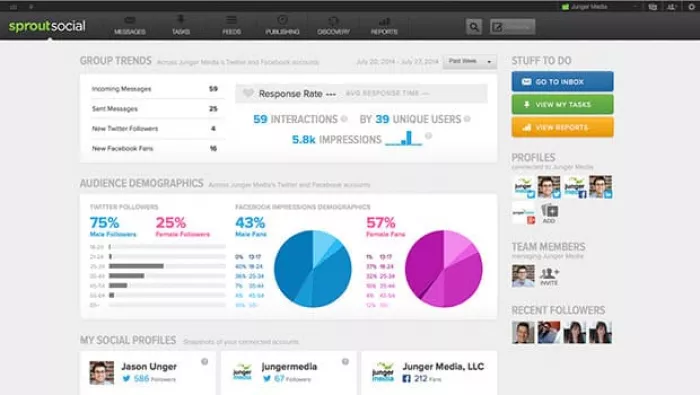
Best for: Brands, agencies, and teams that need serious analytics, reporting, inbox management, and publishing control.
Sprout Social is more than a scheduler. It is a full social media management platform built for businesses that care about performance, reporting, customer engagement, and team collaboration. It is especially useful when social media is not just a posting channel, but part of customer care, brand monitoring, and marketing strategy.
Its AI features support publishing, analytics, insights, and automation. For teams that already track engagement, response times, campaign results, and social conversations, Sprout Social’s value is in combining data with workflow. It is not the cheapest tool, but it is one of the more powerful options for businesses that need depth.
AI features worth noting:
● It supports smarter publishing and content workflows.
● It helps teams analyze social performance and audience behavior.
● It can assist with insights, reporting, and customer engagement workflows.
● It is useful for teams managing social conversations at scale.
Workflow experience:
Sprout Social feels professional and structured. You can schedule posts, manage incoming messages, build reports, and track performance across channels. The tool is best suited to teams that need visibility across marketing, support, and brand communication, not just a simple posting calendar.
| What Feels Good | What Feels Limited |
| Strong reporting and analytics features | Expensive for small creators |
| Good for agencies and larger teams | Too advanced for basic scheduling needs |
| Useful inbox and engagement tools | Some advanced features require higher plans |
Pricing: Sprout Social pricing starts at $79/month for its Essentials tier. Higher plans and advanced business features cost more depending on users and requirements.
Use it if: You need scheduling, analytics, reporting, engagement tools, and business-level social media management.
Skip it if: You only need a simple calendar and basic AI captions.
Verdict: Sprout Social is best for brands that take social media seriously as a business function, but it is not the most budget-friendly option for solo users.
5. SocialBee
Best for: Creators, startups, agencies, and businesses that want category-based scheduling and evergreen content recycling.
SocialBee stands out because of how it organizes content. Instead of only scheduling posts one by one, users can create content categories such as promotions, tips, blog posts, videos, product updates, or testimonials. This makes it easier to keep a balanced content calendar and avoid posting the same type of content repeatedly.
The AI features make SocialBee useful for teams that need regular content output. It can help generate social posts, create captions, and support evergreen posting. For users who want to build a repeatable system, SocialBee feels more strategic than a basic scheduler.
AI features worth noting:
● It helps generate social media captions and post ideas.
● It supports evergreen content recycling through organized categories.
● It can help maintain a balanced mix of content types.
● It is useful for users who post regularly across many platforms.
Workflow experience:
SocialBee works best when you think in content categories. You create different buckets for your posts, add content to each category, and schedule when those categories should publish. This helps creators and teams maintain consistency without manually planning every single post from scratch.
| What Feels Good | What Feels Limited |
| Strong content category system | May take time to set up properly |
| Good for evergreen content recycling | Interface can feel less minimal than Buffer |
| Useful for agencies and frequent publishers | Best value comes when you use the system regularly |
Pricing: SocialBee offers a 14-day free trial. Paid plans start at $29/month for Bootstrap, $49/month for Accelerate, and $99/month for Pro. Promotional discounts may reduce the first few months.
Use it if: You want a scheduling system that helps organize and recycle content instead of only posting manually.
Skip it if: You prefer a very simple scheduler with almost no setup.
Verdict: SocialBee is a strong choice for users who publish often and want AI-assisted content planning with a more structured evergreen workflow.
6. Planoly
Best for: Visual creators, small brands, influencers, and businesses focused on Instagram, Pinterest, TikTok, and content aesthetics.
Planoly is built around visual planning. It is a good fit for creators and businesses that care about how content looks before it goes live. The platform helps users plan, organize, schedule, and manage posts across major social channels, with a strong emphasis on visual content and creator workflows.
Its AI features are useful for caption writing and content organization. Planoly is not trying to be a heavy enterprise platform. Instead, it works better for creators, ecommerce sellers, lifestyle brands, and social managers who want a simple visual planner with enough AI help to speed up posting.
AI features worth noting:
● It includes AI caption writing support.
● It helps creators plan visual content across social platforms.
● It supports content organization, auto-posting, and calendar planning.
● It is useful for users who want a cleaner visual workflow.
Workflow experience:
Planoly feels simple and creator-friendly. You upload or organize content, use caption tools where needed, plan posts visually, and schedule them. It is especially useful when your content depends on images, short videos, product visuals, or consistent branding.
| What Feels Good | What Feels Limited |
| Strong visual planning experience | Not built for deep analytics-heavy teams |
| Good for Instagram and creator workflows | Monthly upload limits may matter on lower plans |
| Easy for small brands and influencers | Less suitable for large enterprise workflows |
Pricing: Planoly’s Starter plan starts at $16/month when billed monthly, or $14/month when billed annually. Growth starts at $28/month monthly, or $24/month annually.
Use it if: You want a visual content planner with AI caption support and a clean creator-friendly workflow.
Skip it if: You need advanced listening, large-team approvals, or deep performance reporting.
Verdict: Planoly is best for creators and visual-first brands that want a simple scheduling tool built around aesthetics and content organization.
7. Ocoya
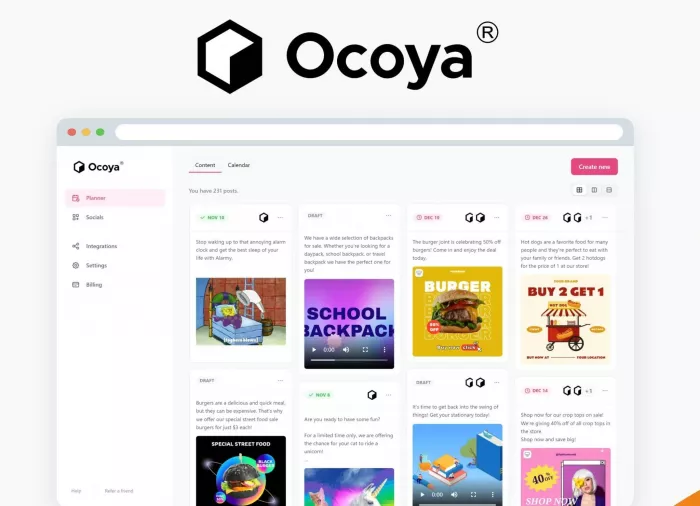
Best for: Small businesses, ecommerce brands, and marketers that want AI content creation and scheduling in one platform.
Ocoya is different from simple schedulers because it leans heavily into AI content creation. It can help generate captions, social media copy, hashtags, and creative content, then schedule posts across connected accounts. This makes it useful for users who do not just need a calendar, but also need help producing the content that fills that calendar.
For ecommerce and product-led brands, Ocoya can be useful because it combines content creation, visuals, captions, and scheduling. The platform may feel more AI-first than classic schedulers like Buffer or Later. That makes it appealing for users who want more creation support, though it may also feel like more tool than needed if you only want basic scheduling.
AI features worth noting:
● It helps generate captions, hashtags, and social post copy.
● It supports AI-assisted content creation for marketing campaigns.
● It can help create visuals and content ideas for social posts.
● It combines AI creation with scheduling in one workflow.
Workflow experience:
Ocoya works best when you start with an idea, product, campaign, or promotion and need to quickly turn it into social posts. You can generate copy, adjust the content, add visuals, and schedule posts from the same platform. It is useful for small teams that need both content creation and publishing support.
| What Feels Good | What Feels Limited |
| Strong AI content creation features | May feel too busy for users who only need scheduling |
| Useful for ecommerce and campaign posts | Output still needs human editing |
| Combines copy, creative, and scheduling | Higher plans are needed for larger teams |
Pricing: Ocoya offers a 7-day free trial. Paid plans start at $15/month for Bronze, followed by $39/month for Silver, $79/month for Gold, and $159/month for Diamond.
Use it if: You want an AI-first tool that helps create and schedule social content from one dashboard.
Skip it if: You already have content ready and only need a clean posting calendar.
Verdict: Ocoya is a good option for small businesses and marketers who need AI content generation along with scheduling, especially for promotional and ecommerce-style posts.
8. Predis.ai
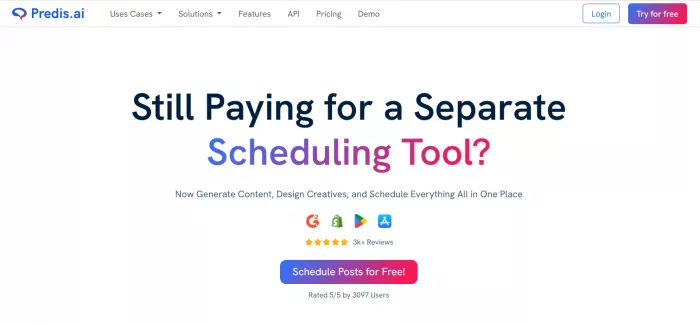
Best for: Marketers and creators who want AI to turn ideas into social posts, videos, creatives, captions, and competitor-inspired content.
Predis.ai is more of an AI social content creation platform than a traditional scheduler. It helps users create social posts from basic ideas, generate creatives, write captions, create short videos, and publish content across channels. This makes it useful for users who struggle more with content creation than with scheduling itself.
The platform is especially helpful when you want to produce multiple post variations quickly. Instead of only asking you to write a caption, Predis.ai can help build the creative direction of the post. It may be more useful for performance marketers, small brands, and creators who need fresh social content frequently.
AI features worth noting:
● It can generate social media creatives from short prompts.
● It helps create captions, videos, and post variations.
● It supports competitor analysis and content inspiration on paid plans.
● It can help users turn product ideas or campaign themes into publishable content.
Workflow experience:
Predis.ai works well when you begin with a rough topic or product idea. The tool helps generate the post, caption, and creative format, after which you can edit and publish or schedule it. It is less of a simple calendar-first experience and more of a content creation-first workflow.
| What Feels Good | What Feels Limited |
| Strong for generating full post ideas and creatives | Not as simple as basic schedulers |
| Useful for video, image, and caption creation | AI output may need careful brand editing |
| Good for marketers who need volume | Pricing depends heavily on credits and usage |
Pricing: Predis.ai offers free trial or limited free access depending on current plan availability. Paid plans start at $32/month for Core, with higher tiers such as Rise at $79/month and Enterprise at $249/month.
Use it if: You want AI to help create the actual post, not just schedule it.
Skip it if: You already have all creative assets ready and only need a simple publishing calendar.
Verdict: Predis.ai is best for users who need AI-generated social creatives, captions, and campaign ideas, but it may feel heavier than necessary for simple scheduling.
9. Publer

Best for: Solopreneurs, small businesses, and budget-conscious teams that want affordable scheduling with useful automation.
Publer is a practical scheduling tool with strong value for smaller users. It supports post scheduling, calendar planning, link-in-bio features, post recycling, and team collaboration depending on the plan. It is especially attractive for users who want to start free and only pay as their social media setup grows.
The AI features are more visible on paid plans, especially around prompts, content ideas, recycling, and productivity. Publer may not feel as polished as some premium enterprise tools, but it offers strong value for users who care about affordability and practical scheduling.
AI features worth noting:
● It supports AI prompts on higher paid plans.
● It helps with post recycling and repeated content workflows.
● It includes scheduling and automation features for regular posting.
● It can support hashtag and analytics workflows depending on the plan.
Workflow experience:
Publer feels straightforward. You connect your accounts, create posts, schedule them, recycle useful content, and manage your calendar. The pricing structure can scale depending on the number of accounts and team members, so it is important to calculate costs based on your actual setup.
| What Feels Good | What Feels Limited |
| Very affordable starting price | Some AI and analytics features require higher plans |
| Free plan is useful for basic users | X support may be limited on the free plan |
| Good scheduling and recycling tools | Cost changes as accounts and members increase |
Pricing: Publer has a free plan for up to 3 social accounts, excluding X in some cases. The Professional plan starts at $5/month for 1 social account, with extra social accounts and members priced separately. Business plans and advanced features cost more.
Use it if: You want a budget-friendly scheduler that can grow with your accounts.
Skip it if: You want an all-in-one premium platform with deep analytics, social listening, and enterprise workflow controls.
Verdict: Publer is one of the best affordable AI-friendly scheduling tools for small teams and solopreneurs who want practical posting features without expensive monthly plans.
10. Metricool
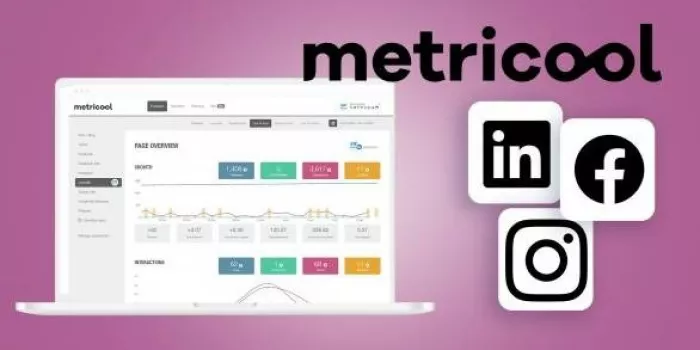
Best for: Creators, agencies, and businesses that want scheduling, analytics, competitor tracking, and reports in one platform.
Metricool is a strong option for users who want more than a publishing calendar. It combines scheduling with analytics, competitor tracking, reporting, ads data, and performance monitoring. This makes it useful for creators who want to understand results and agencies that manage several brands.
Its AI assistant helps with social media content creation, but the real value is the combination of planning and measurement. Metricool is practical for users who want to see what is working, compare competitors, schedule posts, and report performance without jumping between too many tools.
AI features worth noting:
● It includes an AI social media assistant.
● It supports scheduling, analytics, and competitor tracking.
● It helps users plan and measure content from one dashboard.
● It is useful for agencies managing multiple brands and reports.
Workflow experience:
Metricool works well when your workflow includes both publishing and analysis. You can plan posts, monitor performance, track competitors, review analytics, and build reports. It feels more data-focused than visual-first tools like Planoly or Later, but less expensive than some enterprise platforms.
| What Feels Good | What Feels Limited |
| Strong mix of scheduling and analytics | Some platform access may depend on plan or add-ons |
| Free plan is useful for testing | Interface may feel data-heavy for casual creators |
| Good for agencies and multi-brand workflows | Advanced team features require paid plans |
Pricing: Metricool has a free plan. Paid plans start at $20/month for Starter, with higher tiers available for more brands, analytics, and team features.
Use it if: You want scheduling and analytics together, especially for multi-brand or agency-style work.
Skip it if: You only need a very simple post scheduler and do not care much about reporting.
Verdict: Metricool is a strong choice for users who want AI-assisted scheduling plus analytics, competitor tracking, and reporting at a more accessible price than many enterprise tools.
Which AI Social Media Scheduling Tool Should You Choose?
The right tool depends on what slows your workflow down. If the hard part is writing captions, Buffer, Ocoya, and Predis.ai are stronger options. If the hard part is planning visual content, Later and Planoly make more sense. If your team needs reports, approvals, and analytics, Sprout Social, Hootsuite, and Metricool are better fits.
| Your Main Need | Best Tool Options |
| Simple AI-assisted scheduling | Buffer, Publer |
| Visual Instagram and TikTok planning | Later, Planoly |
| AI content creation and captions | Ocoya, Predis.ai |
| Evergreen content recycling | SocialBee, Publer |
| Analytics and reporting | Metricool, Sprout Social |
| Large team social media management | Hootsuite, Sprout Social |
| Budget-friendly scheduling | Publer, Buffer, Metricool |
| Agency or multi-brand workflow | SocialBee, Metricool, Hootsuite |
For most creators and small businesses, Buffer is the safest starting point because it is simple, affordable, and easy to use. Later and Planoly are better if your strategy depends heavily on visuals. Publer is a good budget choice, while SocialBee is stronger for evergreen posting and organized content categories.
For marketers who want AI to create more of the content, Ocoya and Predis.ai are more interesting. They are not just schedulers. They help generate captions, post ideas, visuals, and campaign material. For brands that need reporting, competitor tracking, and deeper analytics, Metricool gives a good balance of features and price, while Sprout Social and Hootsuite fit larger teams with more serious workflow needs.
Final Thought
The best AI social media scheduling tool is not the one with the longest feature list. It is the one that matches how you actually create and publish content.
Choose Buffer if you want the easiest all-rounder for AI-assisted scheduling. Choose Later or Planoly if your content is visual and Instagram-heavy. Choose SocialBee if you want evergreen content categories and a more structured posting system. Choose Ocoya or Predis.ai if you need AI to help create the post itself, not just schedule it. Choose Metricool if analytics matter, and choose Sprout Social or Hootsuite if you are managing social media at a larger business or agency level.
For most users, the smart move is to start with a tool that solves the biggest daily problem first. If writing captions takes too long, pick an AI-heavy creator tool. If posting is inconsistent, pick a clean scheduler. If reporting is weak, pick a platform with stronger analytics. The best tool should make your content workflow faster, cleaner, and easier to repeat every week.



Comments