Email marketing has moved far beyond newsletters and one-time promotions. The best platforms now help teams write subject lines, personalize messages, segment audiences, trigger automations, recover abandoned carts, and understand which campaigns actually convert.
AI matters most when it removes repetitive work from the campaign process. A good AI email marketing tool should help with copy creation, audience targeting, automation logic, send-time optimization, and performance analysis. A weak one only generates generic email copy and leaves the real marketing work untouched.
This guide breaks down seven of the best AI tools for email marketing, using a campaign workflow format so you can quickly see how each platform helps with creation, targeting, automation, optimization, pricing, and best-fit use cases.
Quick Comparison Table
| Tool | Best For | Starting Price | Strongest Area |
| Mailchimp | AI-assisted campaign creation | From around $20/month for Standard | Beginner-friendly campaigns |
| HubSpot | CRM-connected email marketing | From around $20/month per seat for Starter | CRM and lead nurturing |
| ActiveCampaign | Advanced automation | From around $15/month yearly | Behavioral automation |
| Brevo | Affordable email and SMS marketing | From $0, paid plans vary by send volume | Budget-friendly multi-channel marketing |
| Klaviyo | Ecommerce personalization | Paid plans scale by profiles and sending volume | Customer behavior targeting |
| Omnisend | Ecommerce email, SMS, and push | From $16/month | Ecommerce automation |
| GetResponse | AI campaigns, funnels, and landing pages | From $19/month monthly | Campaign funnels and AI creation |
1. Mailchimp: Best for AI-Assisted Campaign Creation
Mailchimp is one of the most familiar email marketing platforms for small businesses, creators, ecommerce beginners, and growing brands. It combines email campaigns, landing pages, automation, audience management, templates, analytics, and AI-assisted content features inside a beginner-friendly interface.
Its AI tools are useful for teams that need help turning a campaign idea into a publishable email. Users can create subject lines, improve copy, generate content ideas, and build campaigns without starting from a blank page. Mailchimp works best when the priority is speed, simplicity, and polished campaign creation rather than extremely complex automation.
| Email Marketing Stage | How Mailchimp Helps |
| Email Creation | AI content suggestions, subject line help, templates, and drag-and-drop editing |
| Audience Targeting | Contact segments, tags, customer behavior, and audience insights |
| Automation | Welcome emails, abandoned cart flows, customer journeys, and follow-up sequences |
| Optimization | A/B testing, campaign reports, engagement tracking, and send-time insights |
Pricing: Mailchimp offers a free plan, plus paid Essentials, Standard, and Premium plans. The Standard plan starts at around $20 per month, while Essentials is usually cheaper.
Best use case: Mailchimp is best for small businesses, creators, bloggers, and ecommerce beginners that want an easy way to create, send, and track professional email campaigns.
Limitation: Mailchimp is simple to start with, but costs can rise as your contact list grows. Advanced automation users may eventually prefer ActiveCampaign, Klaviyo, or HubSpot.
2. HubSpot: Best for CRM-Connected Email Marketing
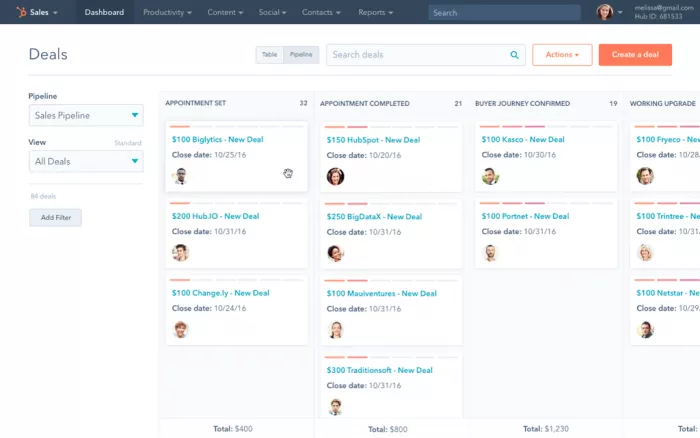
HubSpot is a strong choice for businesses that want email marketing connected to CRM, sales activity, lead scoring, forms, landing pages, and customer records. It works especially well for B2B teams, service businesses, SaaS companies, and brands where email marketing is part of a wider customer journey.
HubSpot’s AI features sit inside a larger customer platform. That matters because email campaigns can use CRM data, lifecycle stages, form submissions, deal activity, website behavior, and contact properties. Instead of sending the same email to everyone, teams can build campaigns around where a lead sits in the sales funnel.
| Email Marketing Stage | How HubSpot Helps |
| Email Creation | AI-assisted email copy, templates, personalization tokens, and campaign drafting |
| Audience Targeting | CRM-based lists, lifecycle stages, lead activity, and contact properties |
| Automation | Lead nurturing, form follow-ups, sales handoffs, and workflow-based journeys |
| Optimization | A/B testing, campaign reporting, CRM attribution, and performance dashboards |
Pricing: HubSpot offers free CRM and marketing tools, while paid Marketing Hub and Starter plans begin at around $20/month per seat depending on the product bundle and region.
Best use case: HubSpot is best for companies that want email marketing linked to sales pipelines, lead nurturing, CRM records, and customer lifecycle data.
Limitation: HubSpot can become expensive as teams add advanced automation, reporting, marketing contacts, and higher-tier features. It may be too much for users who only need simple newsletters.
3. ActiveCampaign: Best for Advanced Email Automation
ActiveCampaign is built for marketers who want detailed automation, behavior-based campaigns, and personalized customer journeys. It is stronger than basic email tools when the workflow includes triggers, conditions, branches, tags, lead behavior, ecommerce activity, and multi-step follow-ups.
Its AI and automation features help teams move from static campaigns to responsive journeys. A user can enter one automation after signing up, another after clicking a link, another after abandoning a checkout, and another after becoming inactive. This makes ActiveCampaign useful for SaaS companies, ecommerce brands, coaches, course creators, and experienced marketers.
| Email Marketing Stage | How ActiveCampaign Helps |
| Email Creation | AI-assisted content, campaign drafting, email templates, and personalization |
| Audience Targeting | Tags, custom fields, behavior tracking, engagement scoring, and segmentation |
| Automation | Conditional workflows, triggers, branches, lead nurturing, and reactivation campaigns |
| Optimization | Automation reports, split testing, engagement tracking, and campaign performance data |
Pricing: ActiveCampaign does not offer a permanent free plan, but it usually provides a free trial. Paid plans start at around $15/month when billed annually, with pricing increasing by contact count and feature level.
Best use case: ActiveCampaign is best for teams that want serious automation logic rather than simple newsletter scheduling.
Limitation: The platform has a learning curve. Beginners may find it more complex than Mailchimp, Brevo, or GetResponse if they only need basic campaigns.
4. Brevo: Best for Affordable Email and SMS Marketing
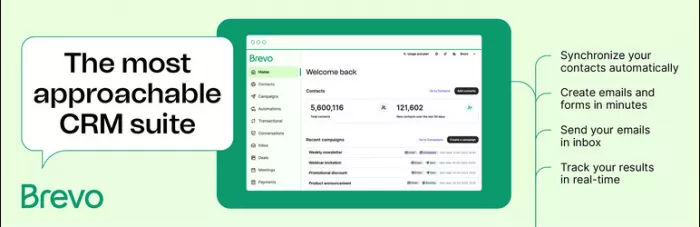
Brevo is a practical option for small businesses, startups, and budget-conscious teams that want email marketing, SMS, WhatsApp, transactional emails, automation, and CRM-style tools in one platform. It is often attractive because its pricing is based more on sending volume than charging heavily by contact count.
Its AI features help with email creation, subject lines, campaign building, and marketing workflows. Brevo is especially useful for businesses that want to run both email and SMS campaigns without jumping between separate tools. It is also a good fit for users who need transactional messaging, such as order confirmations, password resets, and account notifications.
| Email Marketing Stage | How Brevo Helps |
| Email Creation | Drag-and-drop email editor, templates, AI writing assistance, and reusable sections |
| Audience Targeting | Contact lists, segmentation, CRM fields, and engagement-based targeting |
| Automation | Welcome flows, transactional emails, SMS workflows, and customer journeys |
| Optimization | Campaign reports, send-time tools on higher plans, and engagement analytics |
Pricing: Brevo offers a free plan with limited daily sending, making it one of the most accessible tools for beginners. Paid plans vary by monthly email volume, with starter-level paid plans beginning above the free tier.
Best use case: Brevo is best for small businesses that need budget-friendly email, SMS, transactional messaging, and basic automation in one platform.
Limitation: Some advanced automation, reporting, landing page, and AI-driven capabilities may require higher plans. Users focused on deep ecommerce personalization may prefer Klaviyo or Omnisend.
5. Klaviyo: Best for Ecommerce Personalization
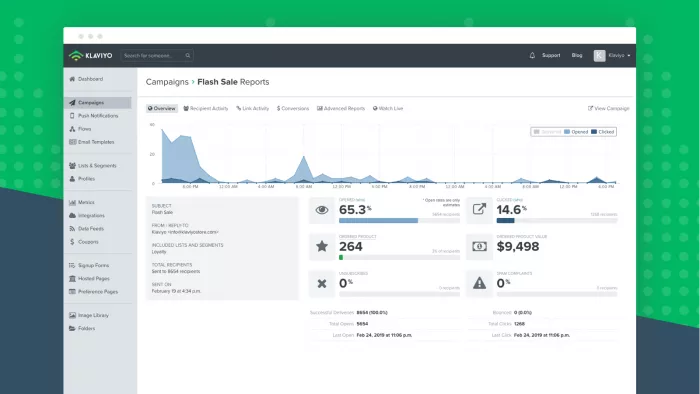
Klaviyo is one of the strongest email marketing platforms for ecommerce brands. It is built around customer behavior, purchase history, browsing activity, product recommendations, abandoned carts, repeat purchases, and customer lifetime value.
The platform is especially useful for Shopify, WooCommerce, BigCommerce, and direct-to-consumer brands that want email and SMS campaigns tied closely to store data. Klaviyo’s AI features support segmentation, predictive analytics, customer insights, product recommendations, and message personalization, which makes it more commerce-focused than general newsletter tools.
| Email Marketing Stage | How Klaviyo Helps |
| Email Creation | AI-assisted content, product blocks, branded templates, and personalized recommendations |
| Audience Targeting | Purchase history, browsing behavior, predicted customer value, and ecommerce segments |
| Automation | Abandoned cart flows, welcome series, win-back campaigns, post-purchase emails, and SMS journeys |
| Optimization | Revenue attribution, predictive analytics, A/B testing, and customer performance reports |
Pricing: Klaviyo offers a free plan for smaller accounts, with limits such as 250 active profiles and 500 monthly email sends. Paid email plans scale based on active profiles and sending volume, with entry pricing generally starting around $20/month once users move beyond the free limits.
Best use case: Klaviyo is best for ecommerce brands that want email and SMS campaigns driven by customer behavior, product data, and purchase history.
Limitation: Klaviyo can become expensive as the contact list grows. It is also less necessary for businesses that do not sell products online or need ecommerce-specific targeting.
6. Omnisend: Best for Ecommerce Email, SMS, and Push Campaigns
Omnisend is designed for ecommerce businesses that want email, SMS, push notifications, popups, automations, and segmentation in one platform. It is especially useful for online stores that want ready-made flows for abandoned carts, welcome sequences, product recommendations, order follow-ups, and customer reactivation.
Its AI tools help with email writing, subject lines, segmentation, product recommendations, and campaign improvement. Omnisend is often easier for ecommerce beginners than Klaviyo, while still offering enough depth for stores that need automation and multi-channel customer journeys.
| Email Marketing Stage | How Omnisend Helps |
| Email Creation | AI email writer, subject line generator, ecommerce templates, and product blocks |
| Audience Targeting | Customer segments, purchase behavior, engagement data, and ecommerce activity |
| Automation | Abandoned cart, welcome series, order confirmation, win-back, SMS, and push workflows |
| Optimization | A/B testing, sales reports, campaign analytics, and automation performance tracking |
Pricing: Omnisend offers a free plan that includes access to core features with monthly sending limits. Paid plans start at $16/month, with higher tiers adding more sending capacity, SMS credits, and advanced support.
Best use case: Omnisend is best for ecommerce brands that want a practical mix of email, SMS, push notifications, forms, and automation without building everything manually.
Limitation: Omnisend is strongest for ecommerce. Service businesses, B2B teams, and CRM-heavy sales teams may find HubSpot or ActiveCampaign more suitable.
7. GetResponse: Best for AI Campaigns, Funnels, and Landing Pages
GetResponse is a flexible email marketing platform for small businesses, creators, course sellers, coaches, and marketers who want more than email campaigns. It includes email marketing, automation, landing pages, forms, funnels, webinars on higher plans, and AI-powered campaign tools.
Its AI features are useful for quickly building email campaigns, writing copy, generating subject lines, creating landing page content, and setting up promotional workflows. GetResponse works well for users who want email marketing connected to lead capture, funnels, landing pages, and sales campaigns without assembling several separate tools.
| Email Marketing Stage | How GetResponse Helps |
| Email Creation | AI email generator, subject line support, templates, and drag-and-drop editing |
| Audience Targeting | Lists, tags, segments, signup forms, and campaign-based audience groups |
| Automation | Autoresponders, lead nurturing, sales funnels, webinar follow-ups, and customer journeys |
| Optimization | A/B testing, analytics, funnel reports, landing page tracking, and campaign insights |
Pricing: GetResponse offers free and trial options, while paid plans start at $19/month on monthly billing or lower when billed annually. Pricing increases by contact count and feature level, especially when users need automation, webinars, advanced funnels, or creator tools.
Best use case: GetResponse is best for creators, coaches, small businesses, and marketers who want AI-assisted email campaigns connected to landing pages, funnels, and lead generation.
Limitation: Some of the best automation, webinar, and funnel features sit above the entry-level plan. Businesses that only need simple newsletters may not use the full platform.
Best AI Email Marketing Tool by Use Case
| Use Case | Best Tool |
| Beginner-friendly AI email creation | Mailchimp |
| CRM-connected email marketing | HubSpot |
| Advanced automation | ActiveCampaign |
| Affordable email and SMS | Brevo |
| Ecommerce personalization | Klaviyo |
| Ecommerce email, SMS, and push | Omnisend |
| Funnels, landing pages, and AI campaigns | GetResponse |
Final Verdict
The best AI email marketing tool depends on what you want AI to improve.
Mailchimp is the safest starting point for users who want AI-assisted campaign creation inside a simple interface. HubSpot is the best option when email marketing needs to connect with CRM, sales teams, lead nurturing, and customer lifecycle data. ActiveCampaign is the strongest choice for advanced automation, especially when campaigns depend on behavior, tags, triggers, and multi-step journeys.
Brevo is a practical pick for small businesses that want affordable email, SMS, transactional messaging, and automation without paying heavily by contact count. Klaviyo is the best tool for ecommerce brands that need deep personalization based on purchase history and browsing behavior. Omnisend is a strong ecommerce alternative for stores that want email, SMS, push notifications, forms, and automation in one workflow.
GetResponse is best for creators, coaches, and small businesses that want email marketing connected to AI campaign creation, landing pages, funnels, and lead capture.
The best AI email marketing platform is not the one that only writes emails faster. It is the one that helps you create better campaigns, send them to the right audience, automate the right follow-up, and understand which messages actually drive clicks, leads, and revenue.



Comments